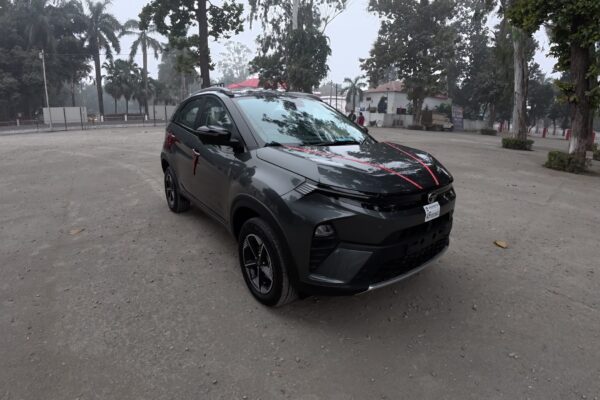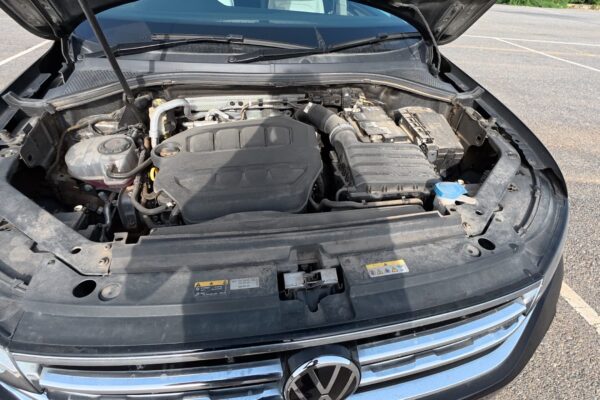

On 14 July 2026, the District Consumer Disputes Redressal Commission in Raipur ordered Maruti Suzuki India Ltd and its authorised dealer to take back a Grand Vitara Strong Hybrid and hand the owner a brand new, E20-compatible car. If they fail to do it in 45 days, they pay ₹20,50,494 instead. On top of that, ₹1 lakh for mental agony and ₹10,000 in costs, payable either way. Total exposure lands around ₹21.6 lakh.
Within hours, the story was everywhere with one headline: E20 petrol destroyed a car and a court has confirmed it.
That is not what the order says.
The commission never decided the engineering question. It never held that ethanol-blended petrol eats engines. What it actually found is narrower, less dramatic, and considerably more useful to you if you are about to take delivery of a new car. It found that a car built in January 2023 was sold to a buyer in June 2024 without anybody telling him what he was buying.
Seventeen months sat between the build date and the invoice. That gap is the entire case. And it is a gap you can close in two minutes with a document check.
What the Raipur Consumer Court Actually Ordered
The complaint was filed by Dr. Premraj Devta under Section 35 of the Consumer Protection Act, 2019, against Maruti Suzuki India Ltd and its authorised dealer, Nexa Magnato. The Commission partly allowed it.
The operative directions:
| Direction | Amount | Deadline |
|---|---|---|
| Take back the vehicle, supply a new E20-compatible car of the same model | Replacement in kind | 45 days |
| If replacement fails: refund vehicle cost | ₹18,29,000 | 45 days |
| If replacement fails: refund RTO charges | ₹1,86,850 | 45 days |
| If replacement fails: refund insurance premium | ₹34,644 | 45 days |
| Compensation for mental agony | ₹1,00,000 | 45 days, payable regardless |
| Litigation expenses | ₹10,000 | 45 days, payable regardless |
| Interest on default | 7% per annum from date of order | Until payment |
Note the structure, because most coverage has flattened it. The ₹20,50,494 refund is an alternative to the replacement. The ₹1.1 lakh in compensation and costs is not conditional. Maruti pays that whether it swaps the car or not.
The Timeline That Explains Everything
Strip out the noise and the case is four dates.
- January 2023. The Grand Vitara Strong Hybrid is manufactured.
- June 3, 2024. It is sold to the complainant as a new car.
- Around November 2024. Roughly five months in, it breaks down.
- July 14, 2026. The Commission orders it replaced.
Seventeen months between build and invoice. In the used car market, a car that has not moved in seventeen months is a problem you price for. On a new car showroom floor, it is invisible. Same paint, same plastic smell, same delivery photos, same price.
Something else happened in that seventeen-month window. Maruti’s own cutoff for full E20 compliance is April 2023. This car was built three months before it.
What Broke, and What the Service Centre Did
According to the complaint, the vehicle developed repeated technical problems and failed to perform as expected. It broke down within five months of purchase.
At the authorised service centre, contamination was detected in the petrol. The fuel tank was cleaned. The car was handed back.
The same issue resurfaced. The tank was cleaned a second time, and the service centre suggested that the earlier cleaning may not have been thorough.
The car kept stalling.
That is the pattern the Commission fixed on. Not the chemistry. The pattern. A car came in with a fault, the workshop treated a symptom, the fault came back, the workshop treated the same symptom again, and the fault came back again. The Commission held that merely repairing the vehicle did not constitute an adequate resolution.
The Lab Test That Proves Nothing
Here is the part that everyone repeated and nobody read.
The owner had a sample of the petrol tested at a government-recognised laboratory. The sample had a curd-like consistency. The lab found that it contained ethanol.
Ethanol. In petrol. In India.
Every petrol pump in this country sells ethanol-blended petrol. That is the policy. That has been the policy since the E20 rollout went nationwide. As reported, that lab finding establishes exactly one thing: the man bought petrol in India.
If the report gave a blend percentage above the permitted spec, that would matter enormously. It would be evidence of adulteration or a pump out of compliance, which is a completely different story with a completely different villain. Nobody has published that number. Until somebody does, “lab confirms ethanol in fuel” is not a finding. It is a description of the fuel supply.
What Actually Makes Curd in a Fuel Tank
The curd-like consistency is real and it is worth explaining properly, because the explanations circulating on social media are mostly wrong.
There are two well-understood mechanisms by which ethanol-blended petrol turns into sludge, and neither of them is “E20 is corrosive and melts your engine.”
Phase separation. Ethanol is hygroscopic. It pulls water out of the air and holds it in solution with the petrol. There is a limit. Past a certain water content, which drops as the temperature drops, the mixture cannot hold together. The ethanol and water separate out and settle at the bottom of the tank as a distinct layer. The fuel pickup sits at the bottom of the tank. The pump feeds that layer straight to the engine and the car stalls. The petrol left floating on top has lost its ethanol, which means it has lost octane too.
Solvent action. Ethanol is a solvent. In a fuel system that has accumulated gum, varnish and deposits, ethanol lifts that material off the tank walls and lines and carries it downstream. It ends up in the fuel filter and the injectors. The car runs badly, then stops.
Both mechanisms need two ingredients: time, and moisture.
This car had seventeen months of both before its first owner ever turned the key.
To be clear about what is and is not established: nobody has published which mechanism applied here. The order does not say. The lab report is not public. Any creator telling you with confidence which one it was is guessing.
The Two Levels of E20 Compliance Nobody Explains
This is the technical distinction the entire E20 debate keeps collapsing, and it is why “is my car E20 compatible” is a badly formed question.
Material compatibility means the physical fuel system survives ethanol. The seals, gaskets, fuel lines, pump internals and tank are made of materials that do not degrade in contact with a 20% ethanol blend. A materially compatible car will not leak, corrode or fail structurally on E20.
E20 tuned, or fully compliant, means everything above, plus the engine management is calibrated and certified for the blend. The ECU knows to expect the oxygen content and the different stoichiometric ratio of E20. Fuelling, ignition timing and adaptation ranges are mapped for it.
A car can be materially compatible and still not be E20 tuned. It will not dissolve. It will run rich or lean at the edges of its adaptation range, lose a bit of efficiency, and it will not have been validated on the blend.
Maruti’s publicly stated position is that its entire lineup became E20 compliant from April 2023, aligned with BS6 Phase 2. Cars built before that cutoff were not.
This car was built in January 2023. It missed the cutoff by three months, and it was still sitting unsold when the cutoff passed. Then it sat for another fourteen months. Then it was sold as new, into a market where E20 had become the only petrol realistically available.
What the Commission Actually Held, and What It Did Not
Maruti and the dealer defended on straightforward grounds. No manufacturing defect. The malfunction was caused by external factors, specifically contaminated fuel. Contaminated fuel falls outside the scope of the warranty. Therefore no liability to replace the car or pay compensation.
The Commission did not engage that argument on engineering. It did not commission an expert examination of the engine. It did not rule on whether ethanol caused the damage.
What it held:
- The vehicle was manufactured in January 2023 and was not compatible with E20 petrol.
- It was sold to the complainant in June 2024 without informing him of this fact.
- Despite repeated fuel changes, tank cleanings and fresh petrol, the vehicle kept breaking down.
- The opposite parties blamed poor-quality petrol, and when the engine developed a fault, they neither took the vehicle back nor supplied a replacement fitted with an E20-compatible engine.
That combination is deficiency in service and unfair trade practice. Non-disclosure, plus failure to provide a lasting solution.
The Commission did add one observation with real weight. It noted that E20 has become the most readily available fuel at almost all petrol pumps, that ordinary consumers are consequently left without a viable alternative, and that drivers cannot be expected to completely avoid using E20 fuel where no other option exists.
That is the sentence that will get cited. It is not a finding about engines. It is a finding about choice. If your car needs a fuel you cannot buy, that is not the customer’s problem.
This Is Not a National Precedent
Several outlets have called this a landmark expected to set a national precedent for consumer rights across India.
It is not, and this matters.
This is a District Consumer Disputes Redressal Commission order. District commission orders have no binding precedential value on any other commission, in Raipur or anywhere else. They are persuasive at best. A second complainant in a different district can cite it, and a different commission is free to ignore it entirely.
It is also not final. Maruti has an appeal to the State Commission available and will almost certainly take it. Until that appeal is decided, this order is one district bench’s view of one set of facts.
The story is genuinely significant. It is the first time an Indian consumer forum has ordered a car replaced over E20 compatibility, and that is worth reporting. It is not settled law, and anyone selling it to you as settled law has not read what a district order is.
Root Cause Analysis: How This Ended Up in a Courtroom
Every one of these cases has multiple failure points. Removing any single one would have stopped it. Here is where this one broke.
1. The dealer sold ageing stock without disclosure. A seventeen-month-old car is not fraud on its own. Old stock is a normal part of the business. Selling it silently, at full price, without a discount reflecting its age, is the failure. In most markets this is disclosed and priced. Here it was not mentioned.
2. The buyer did not check the manufacture date. This is the one that hurts, because it is the cheapest to fix. The manufacture date is stamped on the car and printed on the paperwork he signed. It costs two minutes to read. He did not read it, and almost nobody does.
3. The compliance cutoff passed while the car sat. In January 2023 this car was legal, compliant and correct for the fuel of the day. By June 2024 it was a car built for a fuel that had largely stopped existing at Indian pumps. Nothing changed about the car. The country changed around it, and it sat in a stockyard through the change.
4. The workshop treated the symptom twice. Contamination found, tank cleaned, fault returns, tank cleaned again, fault returns. At no point in that loop did anyone step back and ask why this specific car kept doing this and other cars did not. Two identical repairs producing two identical failures is the point at which you stop repairing and start diagnosing.
5. Nobody escalated when repair clearly failed. The Commission’s sharpest criticism was not about ethanol. It was that when the engine developed a fault, they failed to take the vehicle back and did not provide a new vehicle of the same model with an E20-compatible engine. The case existed because two repairs failed and nothing happened after that.
Failure points two and five are the ones a buyer controls. Point five only becomes available to you if you have documentation. Point two is where the whole thing was winnable.
The Two-Minute Check That Catches Old Stock
A seventeen-month-old stock unit and a car built last month look identical under showroom lights. Same paint, same tyres, same everything a walk-around inspection can see. You cannot catch this with your eyes. Panel gaps will not tell you. A test drive will not tell you.
The manufacture date is written down in four places. Read any of them.
1. The VIN plate. Every car sold in India carries a compliance plate, usually on the B-pillar or inside the driver’s door frame, stamped with the month and year of manufacture. This is the primary source. It is on the car itself and it cannot be edited by the showroom.
2. Form 21, the sale certificate. The manufacturer’s sale certificate carries the month and year of manufacture. You need this document to register the car, so it exists, and you are entitled to see it before you accept delivery.
3. Form 22, the roadworthiness certificate. Issued by the manufacturer, it carries the build details.
4. The tax invoice. Cross-check the VIN on the invoice against the VIN stamped on the car. They must match. If the invoice VIN and the plate VIN do not agree, stop the delivery.
What to do with it once you have it:
- Under 3 months old. Normal. Proceed.
- 3 to 6 months old. Acceptable, but ask about it. Fluids and battery deserve a closer look on a car that has been sitting.
- Over 6 months old. Ask for a discount and mean it. Ask specifically whether any regulation, emission norm or fuel standard has changed since the build date.
- Over 12 months old. Walk away, or negotiate hard enough that the risk is priced in. This is the zone this Grand Vitara was in, twice over.
That last question is the one nobody asks. Has anything changed since this car was built? In a market pushing through E20, BS6 Phase 2, and now flex fuel, the answer is often yes, and the car will not tell you.
Why PDI Documentation Comes First
There is a pattern here, and it is not about ethanol.
A few months ago we covered a buyer who paid ₹37 lakh for a Toyota Innova Hycross ZX(O) and was handed a ZX. He drove it for nearly a year before anybody noticed. ZX and ZX(O) are nearly identical inside. The headline difference is ADAS, and ADAS does nothing in a parked showroom car. A consumer court ordered the dealer to take it back and pay ₹6.6 lakh.
Now a doctor in Raipur has been handed a car built seventeen months before it was sold to him, in a country that changed its fuel in between.
Different cars. Different states. Different manufacturers. Identical failure.
In both cases, the defect was invisible on the vehicle and fully documented on the paperwork. In both cases, the buyer signed the paperwork without reading it. In both cases, the discovery came months later, from a service centre, by accident. In both cases, the fix would have taken two minutes at delivery.
This is why documentation is the first section of the PDI Master Blueprint and not an appendix at the back.
The instinct at delivery is to go straight to the car. Check the panel gaps. Look for swirl marks in the paint. Run a torch along the sills. All of that is worth doing and none of it would have caught either of these cases.
Paint problems are annoying. They are also cheap, obvious and fixable. The expensive failures at delivery are the ones that do not show up on the car at all. Wrong variant. Wrong build date. Wrong VIN. Wrong compliance status for the fuel you are legally going to put in it. Every single one of those is on a piece of paper somebody is waiting for you to sign without reading.
PDI is not optional. And the first thing you inspect is not the car.
FAQ
Did the consumer court rule that E20 petrol damages engines?
No. The Raipur District Consumer Commission held that the manufacturer and dealer were liable for deficiency in service and unfair trade practice, because a January 2023 car that was not E20 compliant was sold in June 2024 without disclosing that to the buyer, and because repeated repairs failed to resolve the fault. The Commission did not rule on the engineering question of whether ethanol caused the damage.
Is my Maruti E20 compatible?
Maruti Suzuki has publicly stated that its entire lineup is E20 compliant from April 2023, in line with BS6 Phase 2. Cars built before that cutoff were not fully E20 compliant. Check the manufacture date on your VIN plate, not the year you bought the car. The two are frequently different, which is the entire point of this case.
What is the difference between E20 material compatible and E20 compliant?
Material compatible means the fuel system components, the seals, lines, gaskets and tank, physically survive contact with a 20% ethanol blend without degrading. Fully compliant, or E20 tuned, means the engine is additionally calibrated and certified to run the blend. A car can be materially compatible without being tuned for E20.
How do I check my car’s manufacture date before taking delivery?
Read the compliance plate on the B-pillar or the driver’s door frame, which is stamped with the month and year of manufacture. Cross-check it against Form 21, the manufacturer’s sale certificate. Also confirm that the VIN on the tax invoice matches the VIN stamped on the car.
How old is too old for a new car?
Anything under three months is routine. Beyond six months, negotiate on price and ask whether any regulation or fuel standard has changed since the build. Beyond twelve months, treat it as a serious problem, not a bargaining chip.
Is this order a legal precedent for other E20 cases?
No. District Consumer Commission orders have no binding precedential value. Another commission can cite this one as persuasive reasoning or ignore it entirely. The order is also open to appeal before the State Commission.
Can I claim compensation if my car was damaged by E20?
That depends entirely on your facts, and this order does not establish a general right. What the Raipur order turned on was non-disclosure of a known incompatibility at the point of sale, plus a failure to resolve the fault across repeated service visits. If your car was manufactured after April 2023 and is E20 compliant, the reasoning in this order does not apply to you.
Sources
- District Consumer Disputes Redressal Commission, Raipur, order dated 14 July 2026, as reported by LiveLaw <!– SOURCE LINK: https://www.livelaw.in/consumer-cases/raipur-consumer-commission-maruti-suzuki-grand-vitara-e20-fuel-compatibility-order-541525 –>
- Autocar India, ANI, and The Week reporting on the same order