- Want a spacious premium hatchback — 2,520mm wheelbase gives segment-beating rear legroom
- Drive mostly in the city — light clutch, buttery gearbox, and a refined engine make it effortless
- Can negotiate a strong pre-facelift clearance discount right now
- Value efficiency and high resale over features and outright performance
- Need a chiller AC for hot-city commuting — the Baleno's is among the best in class
- Want the sunroof and updated kit — the facelift is roughly a month away, so waiting makes sense
- Do frequent high-speed highway runs with family — the light build is a genuine consideration
- Prioritise crash protection above all — it's 4-star BNCAP, decent but not class-leading
- Want high-end features — this is a no-nonsense city car, not a feature flagship
- Are buying at full price weeks before the facelift — that's the one scenario to avoid
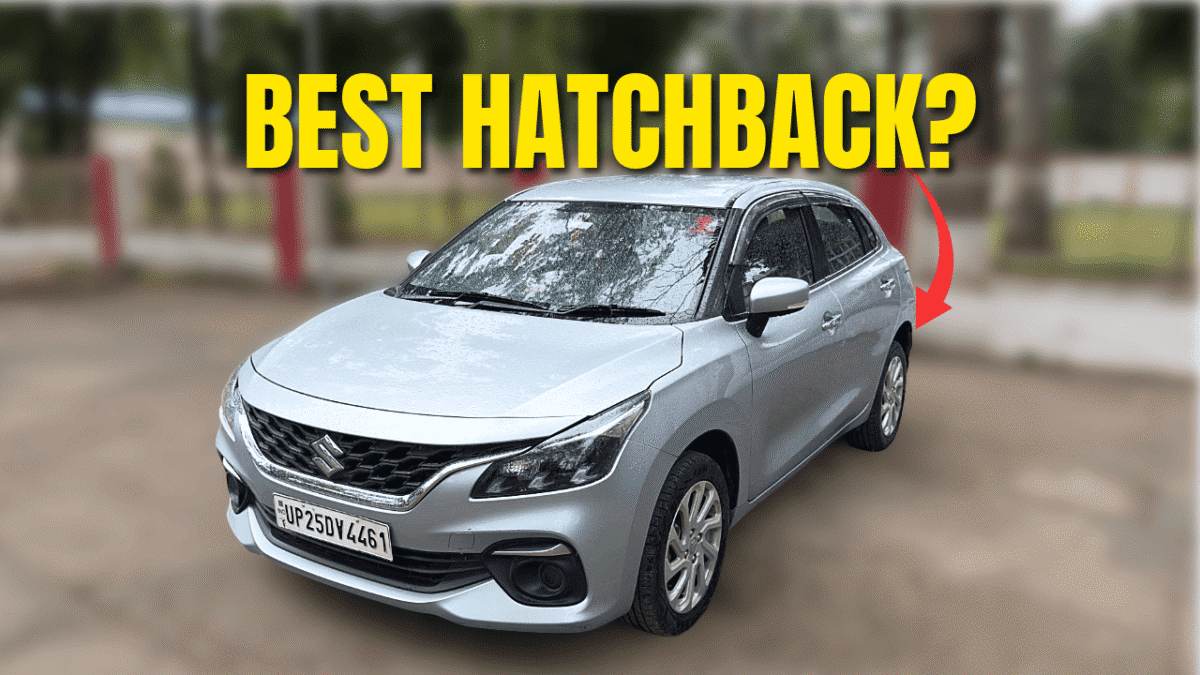
There’s a specific question hanging over the Maruti Suzuki Baleno Zeta right now, and it’s not “is it good.” It’s “should you buy it this month, or wait?” A Baleno facelift is confirmed to arrive around September 2026, roughly a month away as we write this — and it’s set to add a sunroof and other updates. That single fact changes the buying calculus for this car more than anything in the spec sheet.
So this isn’t a standard review. It’s a decision guide. We drove the current Baleno Zeta manual, and we’ll tell you honestly what it’s genuinely good at, where it falls short, and — most importantly — whether you’re the buyer who should grab a pre-facelift deal now or the buyer who should hold on for the new car. Because the answer isn’t the same for everyone, and anyone who tells you it is isn’t thinking about your specific situation.
And there’s a PDI wrinkle that makes this timing matter even more, which we’ll come to. If the Baleno is on your list, the Maruti Suzuki PDI Master Blueprint is the inspection guide we’d want before any Maruti delivery — and for pre-facelift clearance stock specifically, one check matters more than usual.
Space and practicality — the Baleno’s real strength
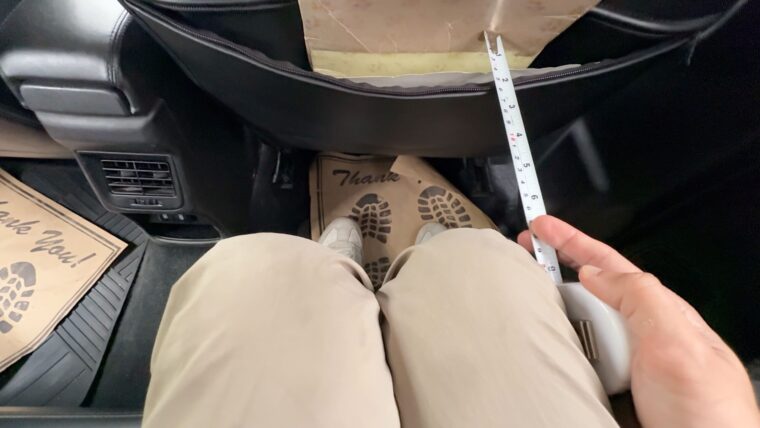
Start with what the Baleno does better than almost anything at its price: it’s spacious. The 2,520 mm wheelbase translates into around seven inches of rear legroom and genuinely decent under-thigh support — numbers that embarrass some cars a segment above. For a premium hatchback, the rear seat is a proper place to spend time, not an afterthought.
The practical touches are well judged. Rear AC vents keep back-seat passengers comfortable in Indian summers. The front seats are height-adjustable, not a given at this price. There’s a rear wiper and defogger. The boot is adequate for a hatchback’s typical duties. The one notable omission is a shark-fin antenna, which is cosmetic but the kind of thing buyers notice next to rivals.
And the air conditioning deserves its own mention: it’s a chiller. In Indian conditions, a fast, powerful AC is a genuine daily-quality-of-life feature, and the Baleno’s is among the best in class. If your commute is a hot-city crawl, this matters more than half the spec sheet.
The K12N engine and the buttery gearbox
The Baleno runs Maruti’s 1.2-litre K12N four-cylinder petrol — 90 PS and 113 Nm. This is not a powertrain chasing thrills; it’s tuned for refinement and efficiency, and on that brief it’s excellent. At city speeds the engine is genuinely refined and quiet. It only gets vocal above 80 km/h, which tells you exactly where this car is happiest: in town, not hammering down an expressway.
The real star is the manual gearbox. It’s buttery smooth — one of the nicest manual shifts in the segment. The clutch is very light with an early bite point, and the throttle is well calibrated, which together make this one of the easiest cars to drive in stop-go traffic. It’s tractable to a genuinely useful degree: even in third gear at crawling speeds around 10 km/h, it pulls cleanly without stalling. For a city car, that low-speed drivability is worth more than peak power figures, and the Baleno nails it.
Tight U-turns come easily in second gear, and the whole car has an unintimidating, light-footed quality that makes it a stress-free daily companion. This is a car engineered around the reality of Indian city driving, and it shows in every control.
The honest safety conversation
Here’s where a buyer-first review has to be careful and precise. The current Baleno holds a 4-star Bharat NCAP rating. That’s a reasonably good score, and it should be reported as exactly that — not spun into something scarier than it is.
That said, our reviewer raised a specific, honest concern: the Baleno is a light car, and the sense of solidity — the “amount of iron” you feel — is less than in some heavier rivals, which matters most in high-speed highway crashes rather than city bumps. That’s not a contradiction of the 4-star rating; it’s a nuance on top of it. A 4-star city car and a highway cruiser you’d want around your family at 120 km/h are different things, and the Baleno is clearly built for the former.
The honest takeaway: if your driving is city-dominated, the Baleno’s safety is perfectly adequate and its 4-star rating backs that up. If you regularly do long, fast highway runs with family aboard, weigh that use case carefully and consider whether a heavier, higher-rated car suits you better. Match the car to how you actually drive.
Buy now or wait for the facelift?
This is the question that matters, so let’s answer it directly rather than hedging.
Wait for the facelift if: you want the sunroof and the updated features, you’re not in a hurry, and you’d rather have the newest version with the longest resale runway ahead of it. The facelift is close enough — about a month — that waiting is entirely reasonable, and buying the outgoing model weeks before a refresh means starting your ownership on a version that’s about to be superseded.
Buy the current car now if: you don’t care about a sunroof, you value a proven, known-quantity car over the newest kit, and — critically you can negotiate a strong pre-facelift clearance discount. As the facelift approaches, dealers need to move outgoing stock, and that’s leverage for a buyer who knows how to use it. The current Baleno is a genuinely good car; getting one at a clearance price is a smart, unsentimental buy.
What you should not do is buy the current car at full price weeks before the facelift without knowing the new one is coming. That’s the scenario that leaves buyers feeling burned, and it’s exactly the kind of thing a dealer won’t volunteer.
The PDI check that matters most on clearance stock
Here’s why the facelift timing makes a pre-delivery inspection more important, not less. As dealers clear pre-facelift Balenos, the units on offer are frequently the ones that have been sitting longest and cars that sit develop specific, catchable problems.
The single most important check on clearance stock is the tyre manufacturing date — the DOT code. Every tyre carries a code indicating the week and year it was made. On a car that’s been in a stockyard for months, you can find tyres that are significantly older than the car’s sale date, which means you’re buying part-aged rubber on a “new” car. Check the DOT code on all four tyres (and the spare) against the delivery date. If they’re old, that’s a negotiation point or a replacement demand before you sign.
Beyond that, our reviewer flagged the checks that matter on any Baleno: panels can flex on a light car, so inspect for transport and handling damage; check the paint carefully across every panel; verify all fluids are correct and topped; and test every electrical component. The full sequence, with photo references for what each issue looks like and dealer-deflection scripts for when the salesperson tries to wave you off, is in the Maruti Suzuki PDI Master Blueprint. 70+ checkpoints, ₹1,499 once, no dealership sponsorship, no upsells. On clearance stock especially, it’s the difference between a great deal and an aged unit dressed up as new.
For the first 2,500 km, treat the engine gently — a proper running-in sets up a new petrol for a long, efficient life, which is what the Engine Break-In Blueprint at ₹999 is built around.
Who the Baleno Zeta is for
The Baleno Zeta is a no-nonsense city car for a buyer who values the right things: space, efficiency, an easy drive, a superb AC, and the strong resale value that Maruti’s most popular premium hatchback reliably holds. It’s not exciting, it’s not the safest highway companion in its class, and it’s about to be facelifted — but for its core mission, it’s one of the most sensible cars you can buy.
If you want high-end features or prioritise crash protection for frequent highway use above all else, look elsewhere. If you want a spacious, efficient, easy-to-live-with city car and you either grab a clearance deal now or wait a month for the sunroof, the Baleno rewards you with years of low-stress, low-cost ownership.
The closing call
The Maruti Suzuki Baleno Zeta manual is a genuinely good city car facing a genuinely well-timed question. Buy it now for a clearance-price bargain if features and the newest badge don’t move you, or wait a month for the facelifted car with its sunroof if they do. Either answer can be the right one — it depends on you, not on us.
Whichever you choose, inspect it properly before you take delivery, because pre-facelift clearance stock is exactly the kind that’s been sitting long enough for old tyres and stockyard damage to creep in. Check the DOT codes. Check the panels. Check everything. The dealer won’t. The PDI comes first.