- Need a rear bench that genuinely seats three adults across
- Want strong under-thigh support for long drives, better than the XUV 3XO
- Value a 5-star Bharat NCAP rating at around ₹10.5 lakh ex-showroom
- Drive mostly on broken city roads where the soft suspension shines
- Want a 360 camera with a genuinely clear image
- Enjoy driving: the diesel manual is still the nicer Nexon
- Sit in heavy traffic daily: the long clutch travel gets tiring
- Expect consistent fit and finish: panel gaps and plastic edges vary between units
- Regularly seat a third or tall adult in the rear: no middle headrest and headroom is tight
- Want a refined engine: the three-cylinder turbo petrol is rough at idle
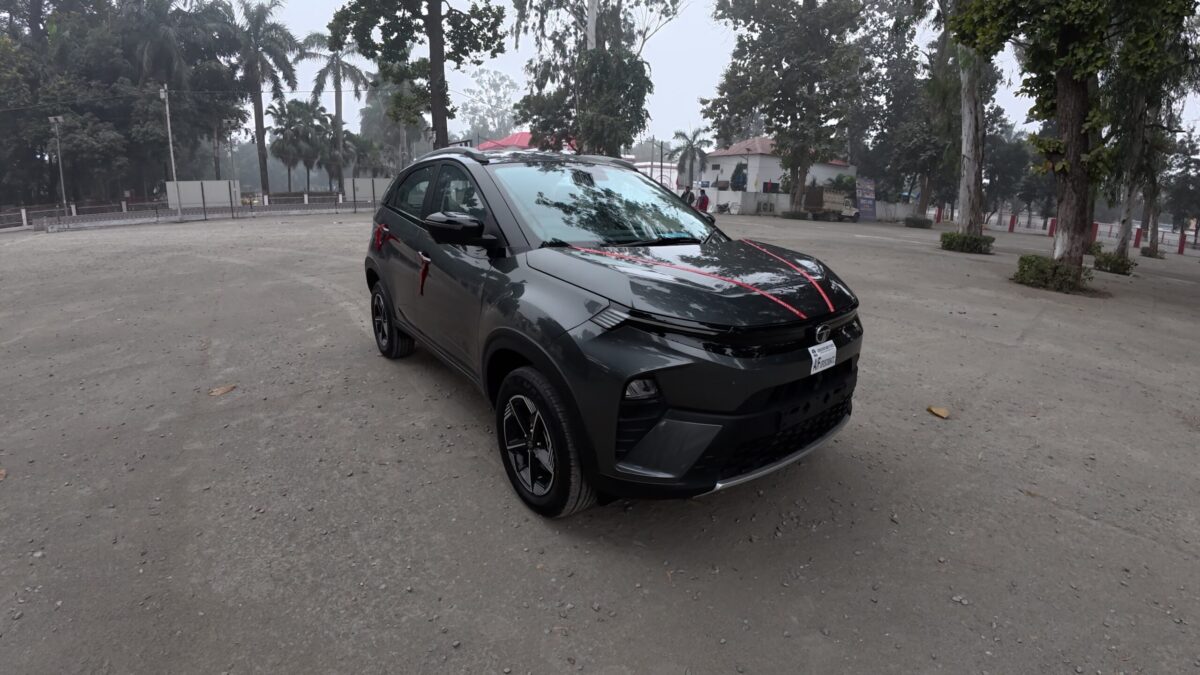
The Tata Nexon is India’s best-selling SUV, and thirty seconds in the back seat tells you a large part of why. In Creative+ S trim with the 1.2 turbo petrol and a six-speed manual, at around ₹10.5 lakh ex-showroom, it offers one of the roomiest cabins in the sub-4m segment and a 5-star Bharat NCAP rating to go with it.
What it doesn’t offer is a particularly enjoyable drive. The three-cylinder turbo petrol is unrefined and the clutch travel is long. After my time with the car, my conclusion was clear: if you care about how a car drives, the diesel Nexon with a manual gearbox is still the better car, for roughly ₹1 lakh more.
This review covers where the petrol manual earns its place, where it falls short, and the fit and finish issues that make a careful pre-delivery inspection worth doing on this car. If the Nexon is on your shortlist, the Tata PDI Master Blueprint takes you through that inspection step by step, so you can do it yourself without paying a third party.

Space and comfort: the real reason to buy a Nexon
The rear bench is the Nexon’s strongest argument. The car is wide, and that width shows up where it matters: three adults can sit across the back without anyone being pressed against a door. Under-thigh support is genuinely good, better than the Mahindra XUV 3XO in my experience, and that makes a difference on any drive longer than half an hour.
Two things to know before you plan on carrying three adults regularly. There is no headrest for the middle rear passenger, which affects comfort on long drives and matters for that passenger’s protection in a rear impact. Rear headroom is also slightly tight, and passengers over six feet will find their hair close to the roof liner.
Up front, the seats offer good support and the cabin is well damped. The doors are heavy and close with a reassuring weight, and road noise is kept in check better than the engine’s character would suggest. Tata has added some thoughtful small touches too, including a coat and bag hook and a dedicated umbrella holder. The boot is a usable 382 litres.
Cabin tech: a sharp 360 camera, an average touchscreen
The 360-degree camera on the Nexon is one of the best I’ve used at this price. The resolution is high and the stitched image is clear enough to place the car precisely in tight parking, which is more useful day to day than most features on the brochure.
The main display looks good, but touch response is average next to Korean rivals such as the Hyundai Venue. Inputs register, just without the immediacy of a Hyundai or Kia screen. The illuminated logo on the steering wheel is a nice touch after dark. The dashboard mixes hard plastics with tactile physical buttons, and the buttons are the better half of that mix.
Fit and finish: where the Nexon gives ground
Look closely and the finishing falls short of the price. The plastics around the steering column and near the instrument cluster have rough, unfinished edges you notice every time you get in. Exterior panel gaps are inconsistent, wider on one side than the other in places where they should match.
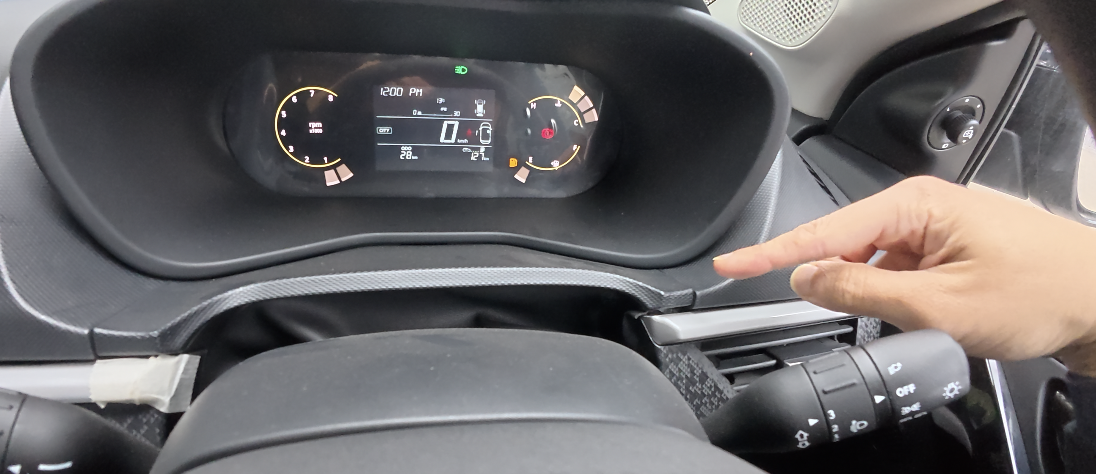
We saw a similar pattern on the Tata Sierra we reviewed recently. None of this stops the car working, but it does tell you that build consistency varies from unit to unit. That makes the specific car allotted to you more important than the variant name on your booking form.
The 1.2 turbo petrol and six-speed manual
The engine is a 1.2-litre three-cylinder turbo petrol making 118 PS and 170 Nm. It is unrefined at idle, with three-cylinder vibration finding its way into the cabin, and it never smooths out as convincingly as the better turbo petrols in this segment.
The turbo comes in at around 1,500 rpm. Below that the engine feels soft, so pulling away on an incline or crawling in traffic means keeping the revs up. Above it, performance is adequate for city and highway use without ever feeling eager.
The clutch is light, but its travel is long, and in heavy traffic that long pedal stroke becomes tiring over a daily commute. The six-speed gearbox is the best part of the drivetrain, with crisp, positive throws. Taken together, it’s a usable powertrain that rarely makes you want to drive for the sake of it.
Ride and handling
The suspension is soft and stable, and on broken Indian roads that is the right setting. Potholes and expansion joints are absorbed well, and the car stays composed at highway speeds. The trade-off is noticeable body roll when you take a corner with any pace, and the Nexon feels like a bigger car to drive than its sub-4m length suggests. It is comfortable rather than engaging, which suits the buyer it is aimed at.
Petrol manual or diesel manual?
Our pick is the diesel manual. The 1.5 diesel has the low-end pull the turbo petrol lacks, and the Nexon diesel with a six-speed manual remains one of the nicer cars to drive in this segment. In Creative+ S trim it costs roughly ₹1 lakh more ex-showroom, and for anyone covering serious monthly distances or valuing the drive, that money is well spent.
The turbo petrol makes sense if your running is low, mostly within the city, and the lower purchase price matters. Buy it for the cabin and the safety rating rather than the driving experience.
What to check before you take delivery
Nexon buyers using our PDI Master Blueprint have flagged scratches, rust, inconsistent panel gaps, and scuffed or dirty interiors at delivery. None of this is unusual for a high-volume car that moves through stockyards quickly, and all of it is easy to catch if you know where to look.
Open the bonnet and check the hinges and the cowl area at the base of the windscreen for early rust. Confirm the coolant and engine oil are at the correct levels, and look through the grille at the radiator fins for bent or damaged sections. Check that the air curtains in the front bumper are open and functional. Walk the car in daylight and compare panel gaps side to side. Inside, look closely at the trim around the steering column and instrument cluster, and at the seats and door pads for scuffs or dirt that suggest the car has been handled more than a new car should be.
You don’t need to hire a third-party inspector for your Tata Nexon PDI. With a structured sequence, a torch and daylight, you can do it yourself and walk into the delivery bay knowing exactly what you’re looking at. The Tata PDI Master Blueprint gives you that sequence: 75+ checkpoints for ₹1,499, with a decision guide included that tells you what to do about each fault you find before you sign. More than 1,300 buyers have used our blueprints to take delivery with that confidence.
For the first 1,500 km, run the turbo petrol in gently. A considered break-in sets a turbocharged engine up for a long life, which is what the Engine Break-In Blueprint at ₹999 is built around.
The closing call
The Tata Nexon Creative+ S turbo petrol manual is a roomy, 5-star rated family SUV held back by an unremarkable drivetrain and finishing that varies more than it should. For a city-focused buyer who wants rear-seat space and safety at this price, it remains an easy recommendation.
If you enjoy driving, stretch to the diesel manual. Whichever you choose, inspect the allotted car in daylight before you sign, because on this model the difference between a good unit and a poor one is visible to anyone who takes the time to look.