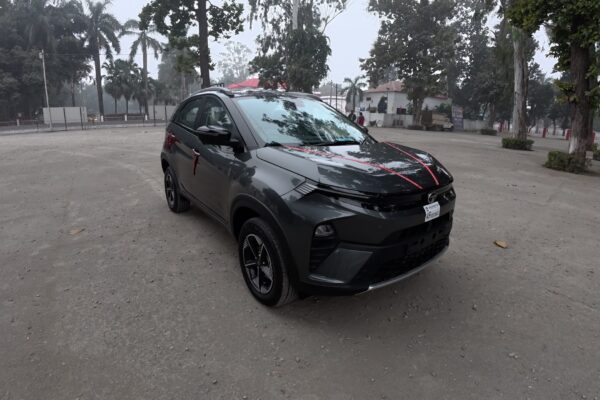
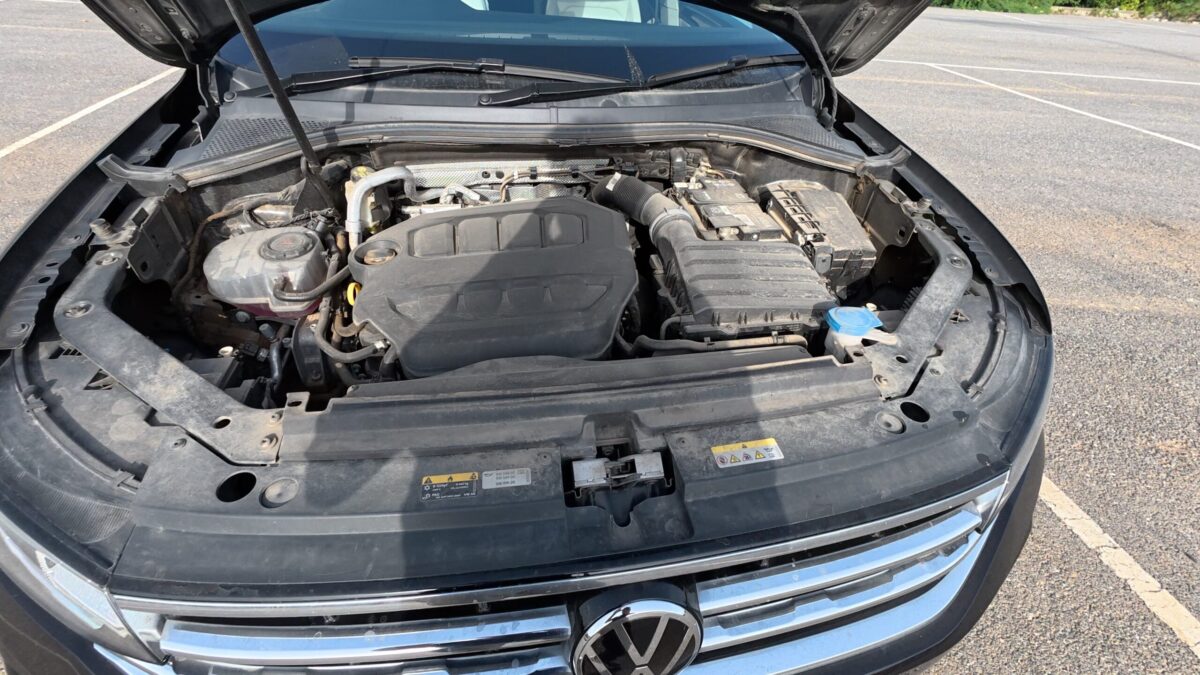
Most buyers walk around the car, check the paint, play with the touchscreen and sign. Almost nobody opens the bonnet.
This is the engine bay part of a PDI. Nine checks, about fifteen minutes, and the only tools you need are a clean rag and your phone’s torch. Do it before you make the final payment, not after.
I get why people skip it. The engine bay looks complicated, there are warning stickers everywhere, and the salesperson is standing right there looking at his watch. It feels like a place for mechanics.
It isn’t. You are not diagnosing anything here. You are reading levels off plastic tanks, checking a date on a battery, and looking for things that should not be there. If you can read a fuel gauge, you can do every check on this page.
And the reason it matters is simple. The engine bay is where a car that has been sitting in a stockyard for months, or a car that had a front-end knock and was quietly put right, tells on itself. The paint outside can be polished. A battery date cannot.
Before you open anything
Three conditions, and they matter more than they sound.
Flat ground. Every level check on this page assumes the car is level. Parked on a slope, the oil and coolant will read wrong and you will either panic over nothing or miss something real.
A cool engine. If the car has just been driven in or run for a demo, give it time. Hot coolant is under pressure and hot oil gives a misleading reading. Ask the dealer to keep the car switched off before you arrive. That one request saves you twenty minutes of waiting.
Daylight if you can get it. Showroom lighting is designed to make cars look good. Your phone torch is designed to find things. Use the torch even in daylight, because the corners of an engine bay are dark at noon.
And the most important condition of all: do this before final payment. Once the money has gone, every problem you find becomes a request instead of a condition. If a dealer tells you inspection only happens after full payment, my honest advice is to go to a different dealer. You are the one spending lakhs. The legal side of this, including the section of the Sale of Goods Act that backs you, is in our guide on refusing delivery of a new car.
How to open the bonnet properly
Two steps, and the second one is where people get stuck.
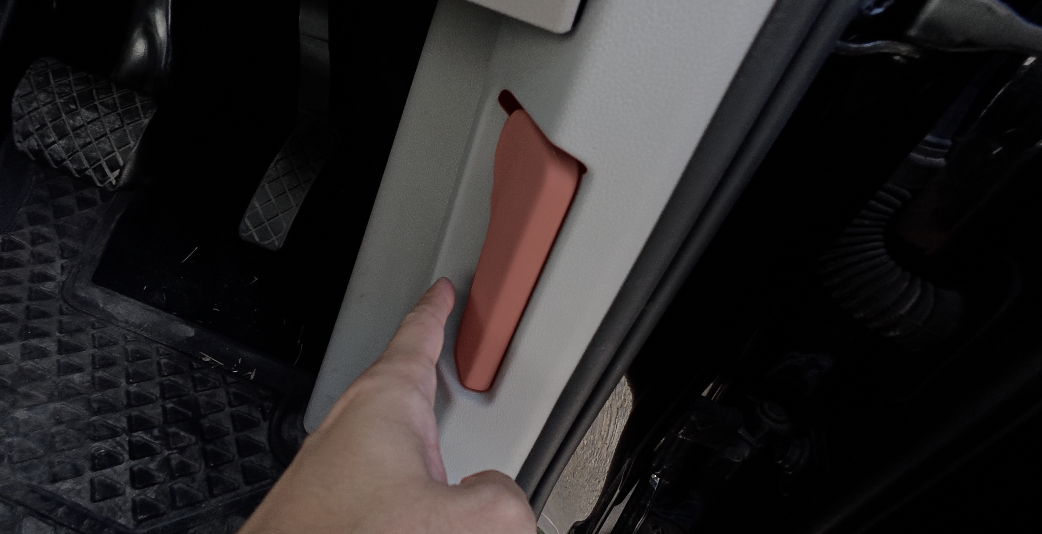
First, the release lever inside the cabin. On most cars sold in India it sits low on the driver’s side, near your knee or down by the footwell. Pull it and the bonnet pops up a centimetre or two.
Then go to the front of the car and feel under the front edge of the bonnet for the safety catch. It is a small lever you push sideways or up, depending on the car. This is the bit people fumble in front of a salesperson, so do it once at home on any car if you have never done it before.
Lift the bonnet and either let the gas struts hold it, or put the support rod into its marked slot. Not near the slot. In it.
When you close it, lower it to about a foot above the latch and let it drop. Do not press it shut with your palm flat on the panel. That is how people put a dent in a brand new bonnet on delivery day.
Radiator grille: what bent fins and dead insects tell you
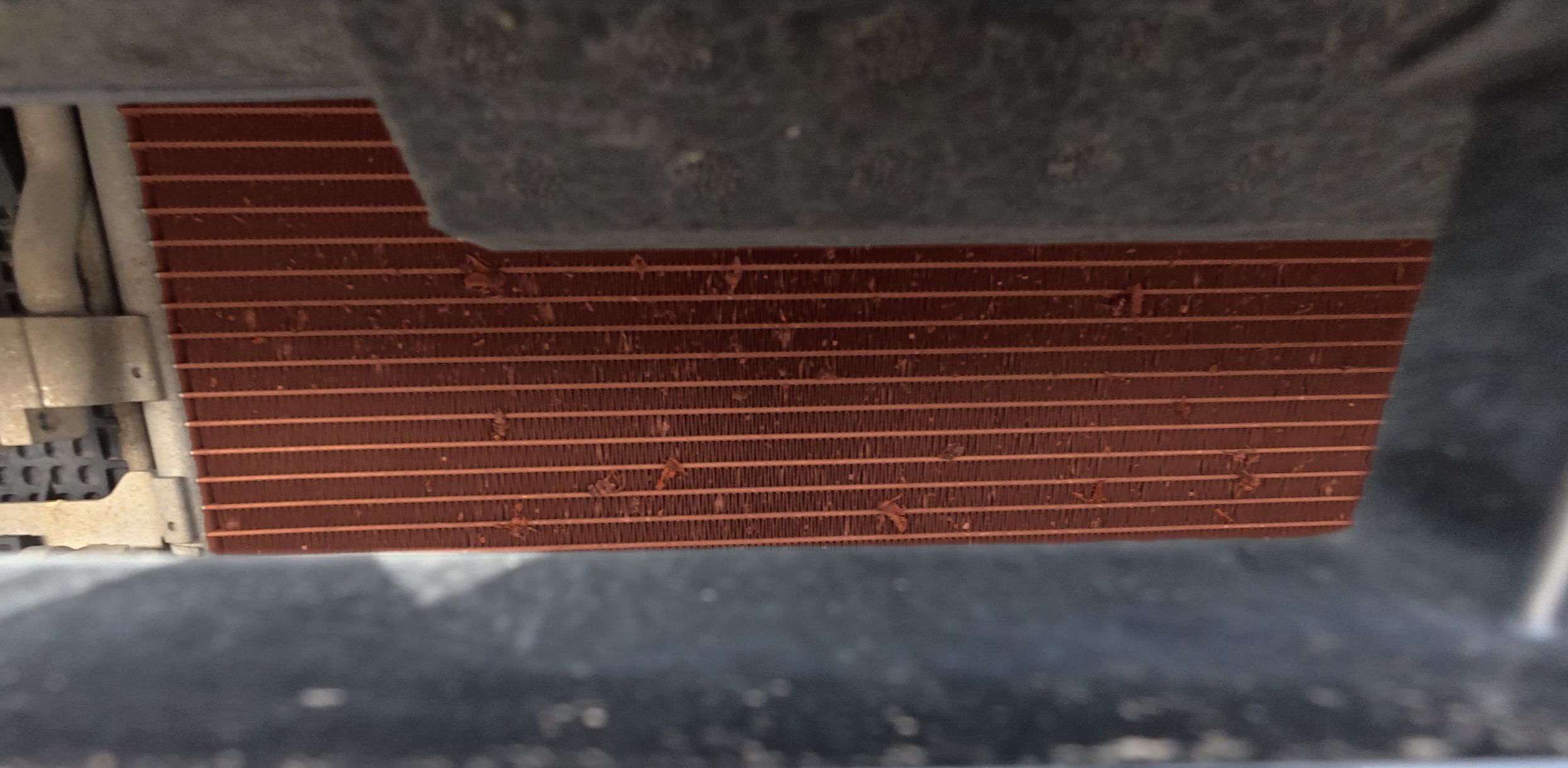
Start at the front, through the grille, with the torch. You are looking at the thin metal fins of the condenser and radiator behind it.
A few bent fins happen during handling and transport and mean nothing. A patch of fins pushed flat, or a crack in the grille plastic, suggests something hit the front of the car.
The one I find most useful is insects. A new car that came off a truck should have a clean grille. A grille with a layer of dead bugs on it has been driven at speed on an open road. That could be a car transferred between dealers by road, or it could be a demo unit. Either way, match it against the odometer, and if the two do not tell the same story, ask the question.
How to check engine oil with the dipstick
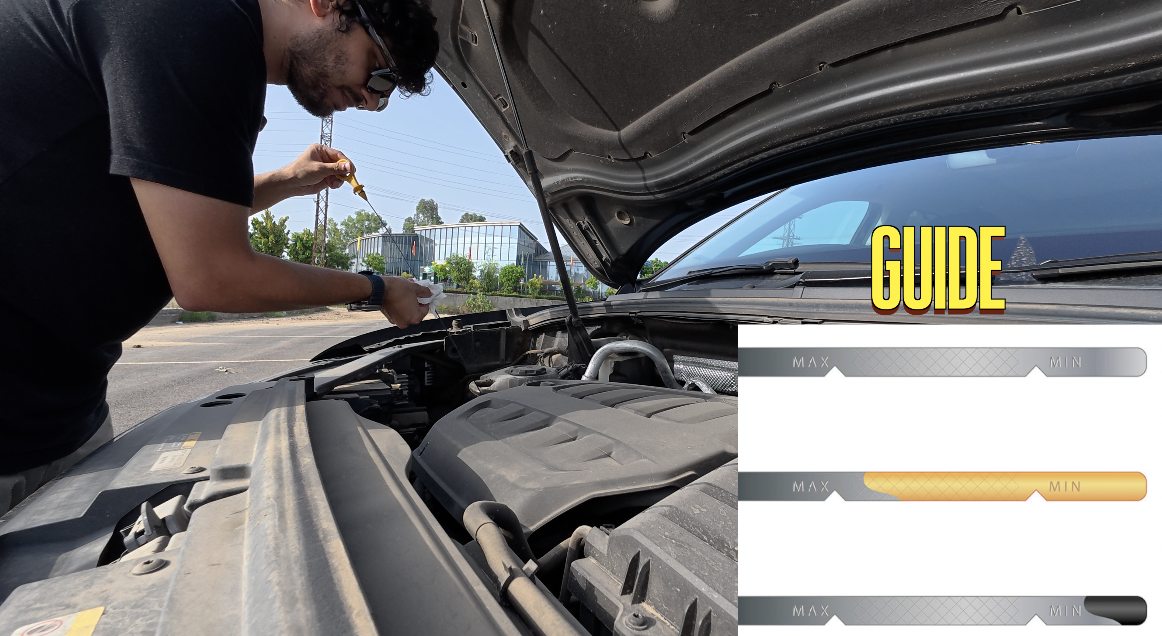
The dipstick usually has a brightly coloured handle, yellow or orange on most cars, so you can find it without knowing anything about engines. The first pull tells you nothing, because oil gets smeared along the stick when it goes in. This is the sequence.
Use your rag, or a tissue. The whole stick, end to end.
Fully seated. A dipstick that is half in gives you a half-right reading.
Do not tip it upright, or the oil runs down the stick and reads higher than it is.
There are two marks or two dots near the tip, minimum and maximum. On a new car the oil should be close to the maximum mark.
Oil sitting near the minimum on a car with a few kilometres on it is not normal and deserves an answer. Oil above the maximum is not good either. Overfilled is a problem of its own, not a bonus.
Also look at the colour. Fresh oil is golden to light brown and translucent. A new car’s oil should look new.
One note. Some cars, mostly premium European ones, have no dipstick at all and show the oil level electronically in the instrument cluster. If you cannot find one, check the owner’s manual before you assume someone has taken it.
How to check the battery’s manufacturing date
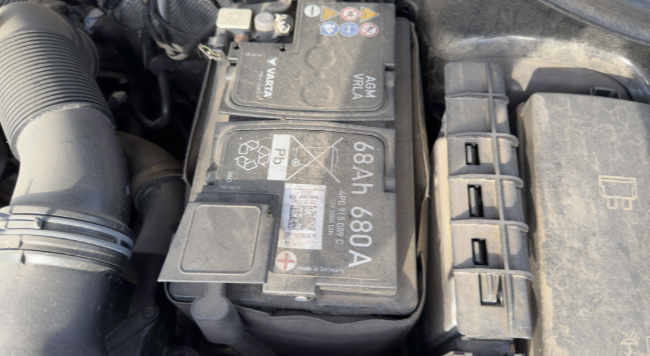
This is the check I would least want you to skip, because the battery is the one part that quietly records how long the car has been sitting.
The date is usually on a sticker on the top or side of the battery, or stamped into the plastic casing, often as a month and year code. Every battery maker formats it differently. If you cannot decode it, ask the service advisor. They can, and the fact that you asked tells them you are paying attention.
A battery made a few months before the car is normal, because batteries are made before cars are assembled. A battery that is much older than the car’s manufacture date on the door jamb sticker, or a car whose own manufacture date is many months old, tells you the vehicle sat somewhere for a long time. A battery that sits without being charged loses health it does not get back.
So go one step further. Ask the service centre for a battery health report. They have a tester that clips onto the terminals and prints a result in a couple of minutes. Most buyers never ask, which is exactly why you should. If the report is weak on a brand new car, that is a replacement before delivery, not a “check at first service”.
How to check the coolant level safely
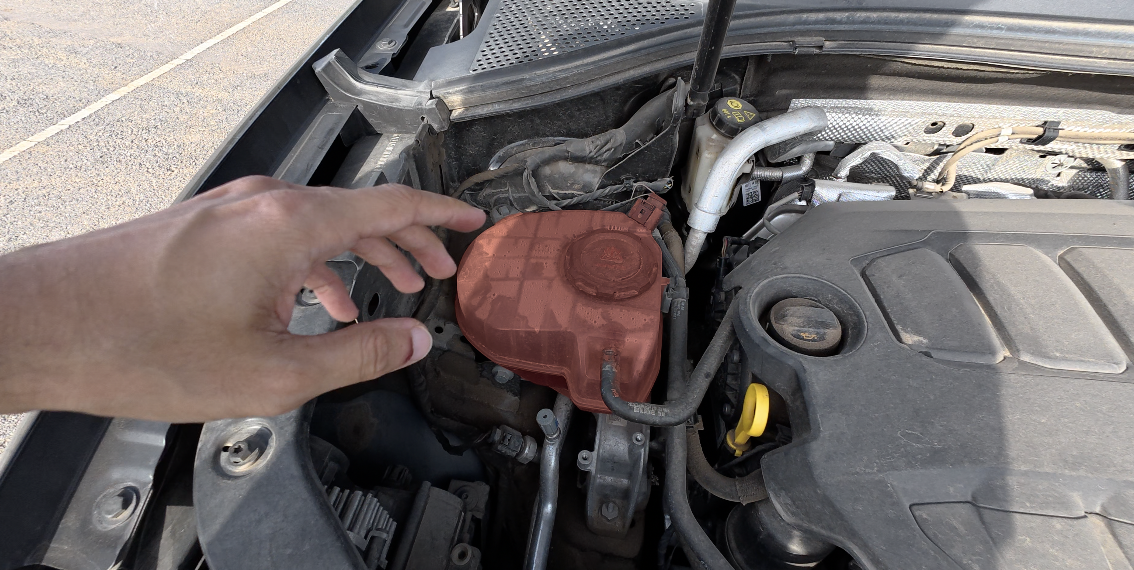
Find the coolant expansion tank, a translucent plastic reservoir with MIN and MAX lines moulded into the side. The level should sit between the two.
Do not open the cap if the engine has been running. The cooling system is pressurised, and hot coolant can spray out with real force. On a cool engine you still do not need to open it, because you can read the level through the side of the tank.
Ignore the colour itself. Pink, green, blue and orange are all normal, because different manufacturers use different coolants. What you are looking at is whether the liquid is clean and clear. Murky, oily or with bits floating in it is not something a new car should have.
Checking for fluid leaks
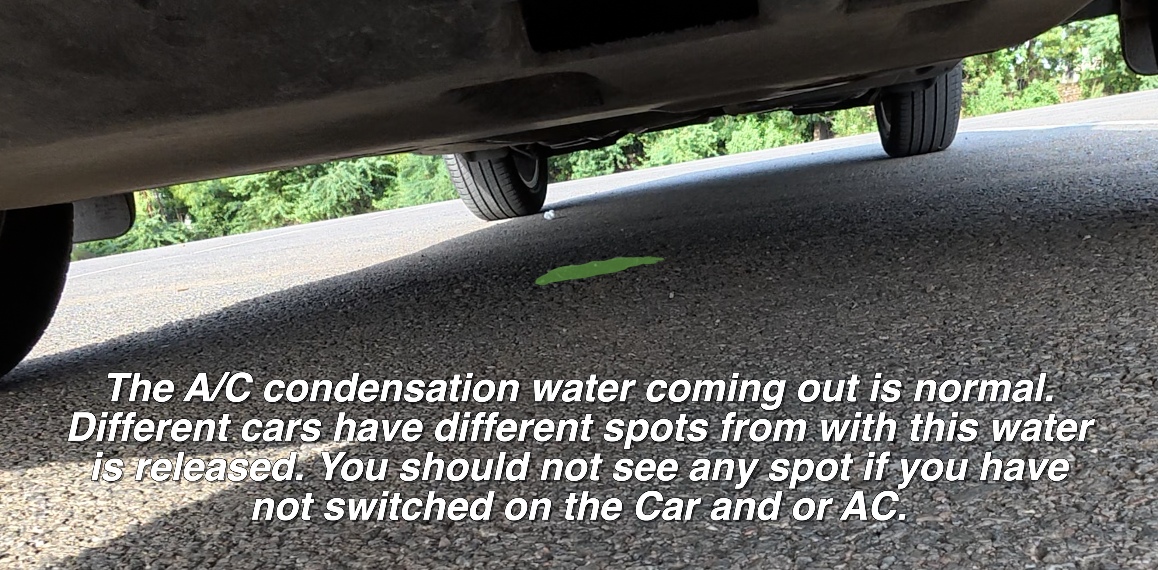
Two places to look. Under the car, at the ground where it has been parked. And inside the bay, with the torch, around each reservoir, along the hoses and at every joint you can see.
If you find something damp, wipe it with the rag and look at what is on the cloth.
Clear water dripping under the passenger side is air conditioning condensate. It is completely normal and the dealer telling you so is telling you the truth. A blue, watery liquid near the washer reservoir is usually washer fluid, which is not a mechanical problem, but a leaking reservoir on a new car still needs fixing.
Anything brown, black, oily, or with a sweet smell is a different conversation. A new car should not be leaking oil or coolant. Do not take the car on the strength of “it is just from the factory”. Our guide on what to say to the dealer when you find a defect covers exactly how to handle that conversation, including who at the dealership can actually approve a fix.
How to check brake fluid without opening the cap
The brake fluid reservoir is usually small, near the back of the engine bay on the driver’s side, with a cap that has a warning symbol on it. Like the coolant tank, it has level marks on the side.
Read it from the outside and leave the cap alone. Brake fluid absorbs moisture from the air, and moisture in brake fluid lowers its boiling point. You gain nothing by opening it and you introduce the one thing it is not supposed to have.
The level should be between the marks. New brake fluid is clear to a light amber colour. Dark fluid in a new car is worth a question.
Does your car even have power steering fluid?
Probably not. Most cars sold new in India today use electric power steering, which is driven by a motor and uses no fluid at all. If you go looking for a power steering reservoir on one of these, you will not find it, and that is fine.
Some cars still use a hydraulic system. Those have a reservoir, usually with a steering wheel symbol on the cap, and level marks you check the same way as everything else. If you are not sure which system your car has, the owner’s manual will tell you in one line.
Overspray and bolt marks: signs a panel has been off
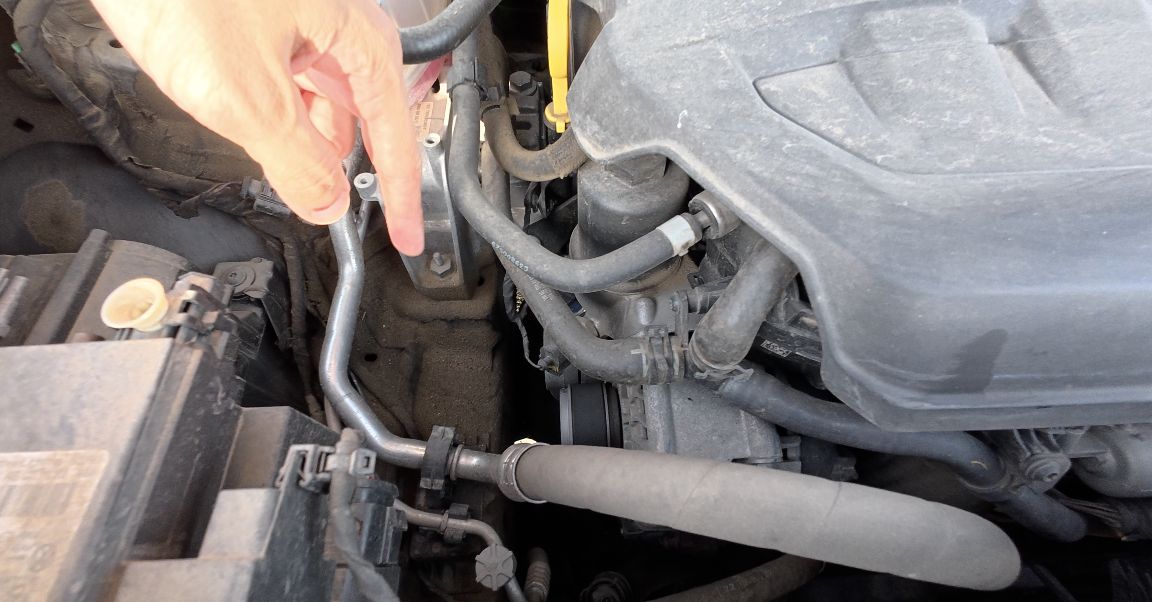
This is the check that catches a car with undisclosed front-end repair, and it is the one most people have never heard of.
Look at the bolts that hold the front fenders and the bonnet hinges. On most cars these are painted along with the body at the factory, so the paint runs unbroken over the bolt head. If a panel has been taken off and refitted, the spanner usually leaves a mark, a scratched edge or a ring of broken paint around the bolt.
Then look for overspray. Paint mist on the rubber seals around the bonnet, on black plastic covers, or on wiring is a sign that something nearby has been repainted. Factory paint does not end up on rubber.
Finding either does not automatically mean the car is bad. Transit damage happens and repairing it properly is not a scandal. Not telling you about it is the problem. Ask directly whether any panel has been removed or repainted, and ask for the answer in writing whichever way it goes.
Removing the engine cover without breaking it
You do not need to remove the engine cover for any of the checks above. But if you want to see the top of the engine, here is how to do it without snapping anything.
Most covers sit on rubber grommets pressed onto pegs. Grip it with both hands and pull it straight up, evenly. Do not lever it up from one corner or twist it sideways. The clips are cheap plastic, they snap easily, and a broken mount means a cover that rattles for the life of the car.
To refit it, line the grommets up with the pegs and press down firmly in the middle. Make sure it sits flat before you close the bonnet.
One more check that isn’t in the video
Trace the visible hoses and wiring with your torch. Cars that sit in open stockyards for a long time sometimes get rodent damage. Rats and squirrels chew coolant hoses, vacuum lines and wiring insulation. Look for nicks, flattened sections, exposed copper, or nesting material tucked into the corners of the bay. It takes a minute and it is a far easier conversation before delivery than after.
The checks at a glance
Your questions from the video
The end of the video was a question and answer section, and a few of those questions come up in my comments every single week. So here they are properly.
“The dealer won’t let me do a PDI until I’ve paid in full. What do I do?”
Go to a different dealer. I know that sounds blunt, and I know it is not always convenient. But a dealership that will not let you look at a car before you pay for it is telling you how the rest of the relationship is going to go. There are other dealers selling the same car, and most of them will let you inspect it if you ask in advance.
“Which engine oil should I use?”
The grade your manufacturer specifies in the owner’s manual. Not the one the mechanic down the road swears by, not a thicker one because “Indian conditions”, not whatever is on offer that week. The engine was designed and tested around a specific grade, and the warranty is written around it too.
“How often should I check the oil myself?”
I check roughly every 5,000 km, and before any long highway trip. It takes two minutes with the dipstick sequence above.
Some people tell me their car will warn them if the oil is low, so why bother. Some cars do have an oil level sensor and will show a message. Plenty do not. The red oil can light on most dashboards is an oil pressure warning, not a reminder to top up. If that light comes on while you are driving, you already have a problem. Pull over safely and switch off. So do not rely on the car to tell you. Check it yourself.
“Should I change the oil early after the break-in period?”
If you can afford it, yes. I would drain the factory-fill oil after the break-in period and put in fresh oil of the specified grade. In the video I called this a flush. To be clear about what I mean: an early oil change, not pouring a chemical flush product through a brand new engine.
Do it at an authorised service centre, with the manufacturer’s specified oil, and make sure it goes into your service record. That way your warranty is never in question.
“Is the manufacturer’s service interval enough?”
My view is that it is a little optimistic. Service intervals on a lot of new cars have stretched to 10,000 km or a year. Those intervals assume reasonable driving conditions.
Open your owner’s manual and find the page on severe operating conditions. Read what counts as severe on that list. Dusty roads, stop and go traffic, short trips, high temperatures. For most people in an Indian city, that is a normal week.
So if your budget allows it, take about 20 percent off the interval. 10,000 km becomes 8,000. It costs you a little more over the years and it is the cheapest insurance an engine can get.
Frequently asked questions
What should I check in the engine bay during a new car PDI?
Nine things: the radiator grille and the fins behind it, the engine oil level on the dipstick, the battery’s manufacturing date, the coolant level, any fluid leaks, the brake fluid level, the power steering fluid if your car has a hydraulic system, the fender and bonnet bolts for spanner marks and overspray, and the engine cover if you want to look underneath it. It takes about fifteen minutes with a rag and a phone torch.
Where should the engine oil be on the dipstick of a new car?
Between the minimum and maximum marks and close to the maximum. Check on flat ground with the engine off and cool. Pull the dipstick, wipe it clean, push it fully back in, then pull it out again and read where the oil film ends. Oil close to the minimum on a new car, or above the maximum, is worth raising before delivery.
How do I check the manufacturing date of my car battery?
Look for a sticker on the top or side of the battery, or a code stamped into the casing, usually showing a month and year. Formats differ between battery makers, so if you cannot read it, ask the service advisor. A battery a few months older than the car is normal. You can also ask the service centre for a printed battery health report, which takes a couple of minutes on their tester.
Why shouldn’t I open the brake fluid cap?
Brake fluid absorbs moisture from the air, and moisture lowers its boiling point. You can read the level through the side of the reservoir, so there is nothing to gain by opening it. The level should sit between the marks, and new fluid is clear to light amber.
Does every car have power steering fluid to check?
No. Most new cars sold in India use electric power steering, which uses no fluid at all, so there is no reservoir to check. Cars with a hydraulic system have a reservoir, usually marked with a steering wheel symbol on the cap. Your owner’s manual will tell you which system your car uses.
How can I tell if a panel has been removed or repainted?
Look at the bolts holding the front fenders and bonnet hinges. On most cars they are painted with the body at the factory, so a spanner mark or broken paint around the bolt head suggests the panel has been off. Also look for overspray, which is paint mist on rubber seals, black plastic or wiring. Factory paint does not end up on rubber.
Will my car warn me if the engine oil is low?
Some cars have an oil level sensor and will show a warning. Many do not. The red oil can light on most dashboards is an oil pressure warning, not a low level reminder, and if it comes on while driving you should pull over safely and switch off. Check the dipstick yourself every few thousand kilometres and before long trips.
What if the dealer won’t allow a PDI before final payment?
My advice is to buy from a different dealer. Once the money has gone, every problem you find becomes a request rather than a condition. Under Section 41 of the Sale of Goods Act, 1930, a seller is bound, on request, to give the buyer a reasonable opportunity to examine goods before acceptance.
Should I change the engine oil early on a new car?
If you can afford it, an early oil change after the break-in period is a reasonable precaution. Use the manufacturer’s specified grade, have it done at an authorised service centre, and make sure it is recorded in your service history so your warranty is never in question. An early oil change is not the same as a chemical engine flush, which I would not use on a new engine.
The TNT PDI Master Blueprint is an interactive tool you open on your phone in the delivery bay. 70+ checkpoints built for your specific brand, with the things owners of that model actually report, and photo capture for anything you want resolved before you sign.